


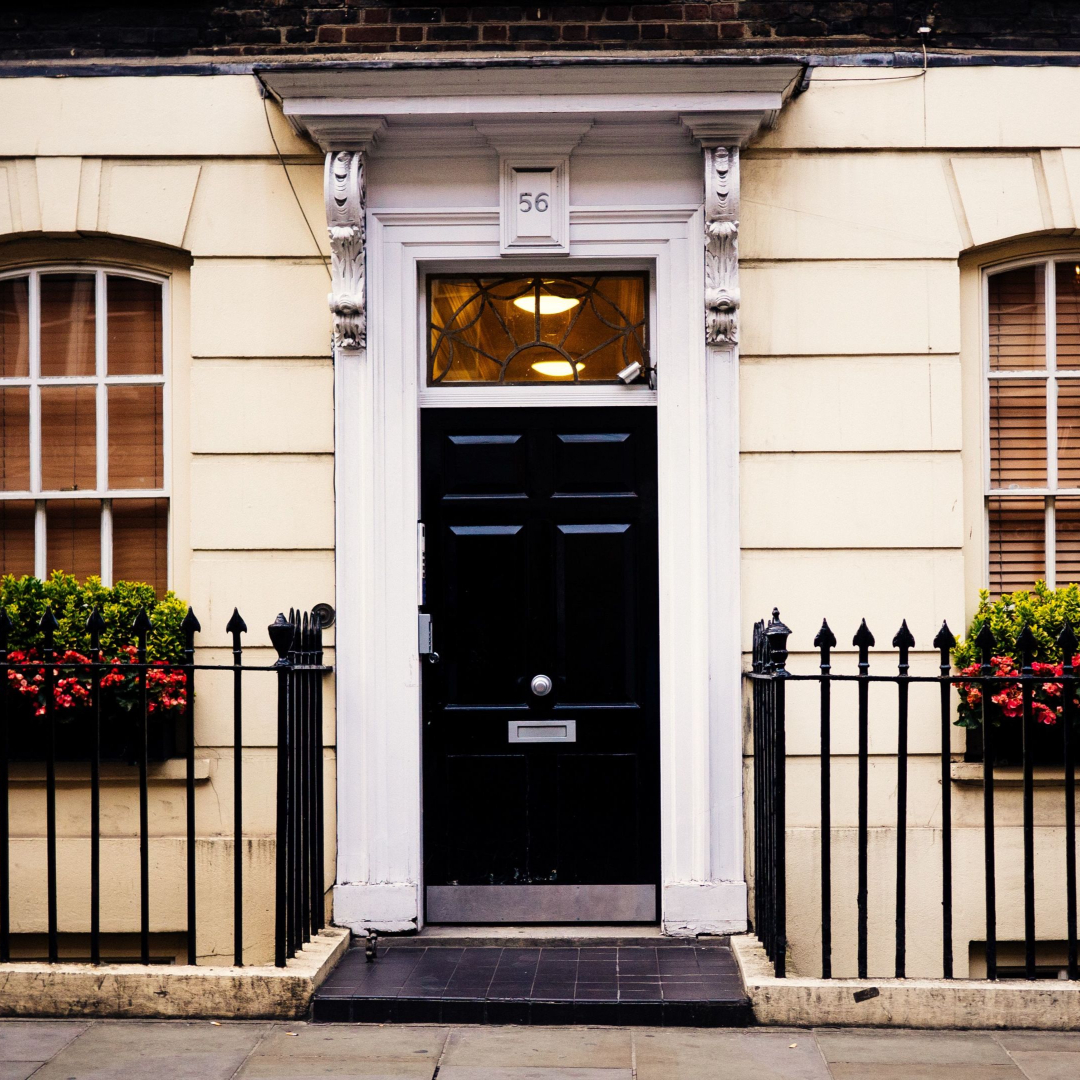
House Names and Social Change: The majority of detached bungalows, townhouses, and cottages now have names. We appreciate bringing a personal touch to our surroundings. Why not, after all? It’s a nice thing if we can make our house feel more like a home.
It’s also not a recent occurrence. Not when you consider social history and learn that people have been naming their homes from the dawn of time. Take, for example, one of the earliest English-language poetry. Beowulf is the name of the poem, and it refers to a house called Heorot (the mead hall). And it was first printed in the eleventh century!
In the thirteenth and fourteenth centuries, there were name rules for houses.
There were definite criteria for naming dwellings many hundred years after Beowulf’s publication. Houses may be called for the person who lived there, the individual’s occupation, or the house’s appearance, depending on local custom. A trend for names with symbolic connotations emerged as well.
All of this is backed up by a database of old London street names. These were a mix of Latin, French, Anglo-Norman, and Old English, all of which eventually evolved into contemporary English.
Gladewyneshouse and Hiotha’s manor-house are two instances of 13th-century homes named for the people who lived there.’
Le Webbeloft and la fforge, on the other hand, are examples of 14th-century houses named for the householder’s occupation. For example, le Crokedhous and le Grenegate were called following their first appearance (in the 14th century).
The Swan, Le Dolfyn, Le Harpe, le Tonne, and le Panyer are examples of houses named after emblems that are still used in bar names today.
Several decades later, during the Enlightenment, naming your home after a state of mind became common in Europe. Frederick the Great of Prussia, for example, called one of his many palaces Sans Souci (No Worries).
As a result of the railways, a new naming tradition for dwellings emerged.
The advent and spread of railways, on the other hand, had the greatest impact on how houses were named in the United Kingdom. The steam engine, which first debuted in the 1840s, made cross-country travel easier. Of course, this led in the formation of “the suburbs,” as we now refer to them.
That meant naming a lot of new houses after their new residents, many of whom considered themselves to be upwardly mobile. Indeed, a new middle class was forming, demanding the creation of a word for their personal pile of bricks and mortar, which they could now proudly refer to as home.
So, what did this new social elite call their homes? Grosvenor Lodge, for example, was associated with the aristocratic, while Elm Tree Cottage, Hillcrest, and Orchard House were associated with the countryside. Some homeowners name their homes after famous culture characters, such as Ivanhoe from the novel Ivanhoe. Others made a joke about it by named their residence Dunroamin (which means “done wandering”), which is still used in Scotland today. Another interesting house name was Ersanmine (hers and mine).
The Victorians also created a new type of home naming: merging existing names to create a new one. This can be seen in Roselea and Ferncroft, for example.
There is a ‘cultural consensus’ on home naming.
Dr. Laura Wright writes in her book “Sunnyside: A Sociolinguistic History of British House Names” that “just as the common given names Robert, Alice, William, Emma, Richard, Geoffrey have remained popular across the British social classes since they were introduced by the Anglo-Normans in 1066, there has been a cultural agreement across all social classes with regard to house-naming.”
House names “transcend local linguistic barriers,” according to a historical linguist at the University of Cambridge, and so serve as a record of social history and migration.
The practise of naming dwellings is becoming less common.
The bad news, according to Wright, is that house naming had begun to wane by the middle of the twentieth century. As more apartment buildings were constructed, communal housing became more common, and people began to rent rather than own, a tendency that has continued (due to the rising cost of property).
And it’s probable that the final reason – the rising cost of housing in the United Kingdom – is the determining factor, especially given that home prices climbed by 152 percent between 1995 and 2016.
Have you contemplated naming your home but don’t know where to start? Then reach out to our friends at Name My House for help and guidance. For further information, call 0208 017 2216 or email info@namemyhouse.co.uk.